
Unrivaled expertise in every grading report.
Only a GIA report is good enough.
With nearly 100 years of research, education and experience, GIA is the authority on diamond, gemstone and pearl reports. We’ve quite literally given the industry the language that now defines quality. When it comes to defining diamond quality, there is no substitute for a GIA report.
Types of GIA reports:
– Natural Diamond Grading Reports
– Diamond Origin Reports
– Natural Colored Diamond Reports
– LGDR by GIA (Laboratory-Grown Diamond Reports)
– Colored Gemstone and Pearl Reports
The language and color system GIA developed is used globally.
Hue: Characteristic color.
Tone: Relative lightness or darkness.
Saturation: Color depth or strength.
Evaluated under highly controlled conditions with color comparators, one of 27 hues is selected for fancy color grading, whereas tone and saturation are determined using terms such as “Fancy Light,” “Fancy Intense,” and “Fancy Vivid.”
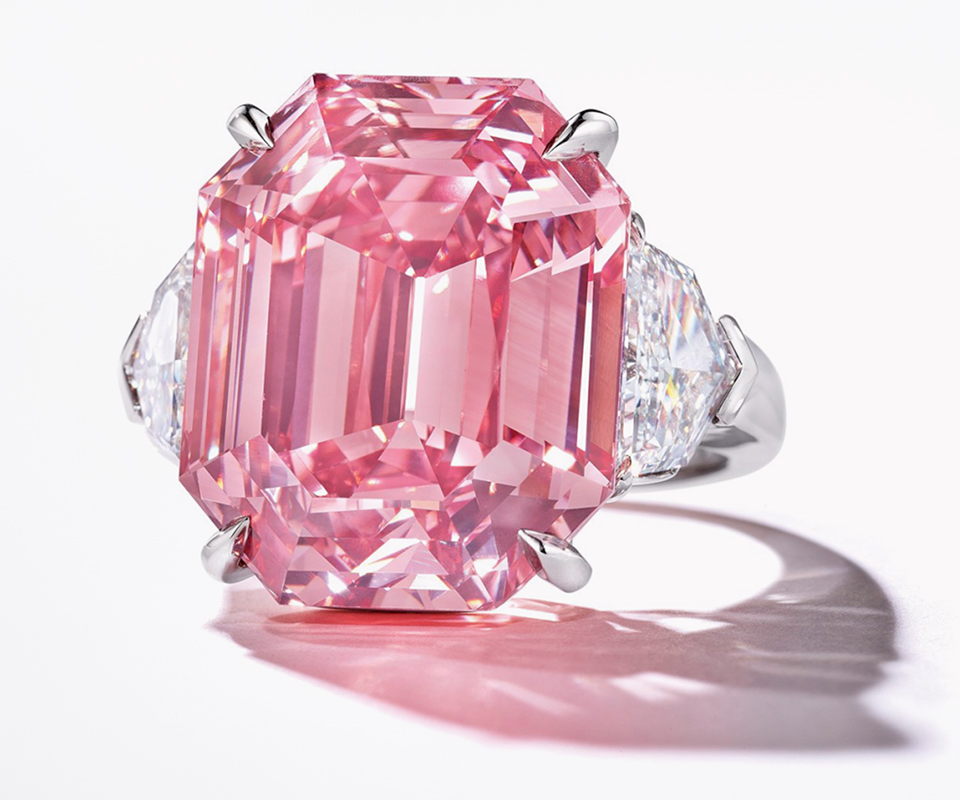
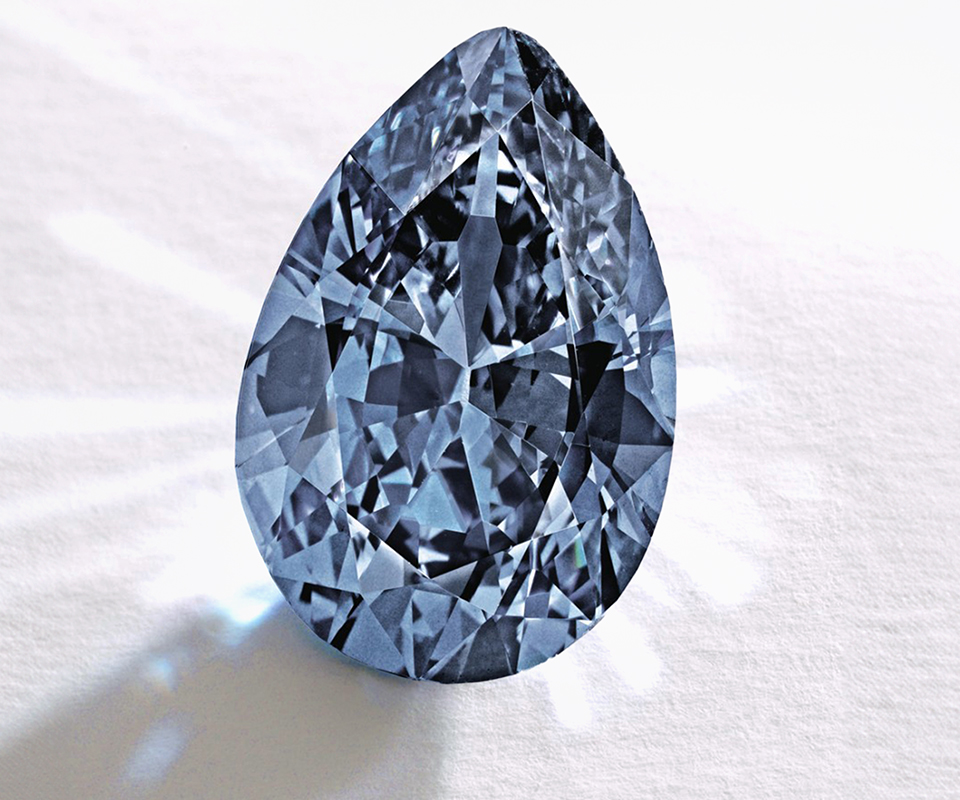
A GIA Colored Diamond Grading Report provides a full quality assessment of a colored diamond including:
– Color grade
– Color origin (natural vs. treated)
– Carat weight
– Clarity
– Plotted diagram of characteristics
– Full color imagery
3 types of colored diamond grading reports.
GIA Colored Diamond Grading Report.
An assessment of color, clarity, polish and symmetry, including a plotted diagram and a graphic representation of its proportions.
GIA Colored Diamond Origin Report.
Includes the same 4Cs information as the GIA Diamond Grading Report along with scientific matching to a diamond rough of known origin. This report does not include faceted stones and requires a rough diamond report number to verify that the spectra data for the original rough diamond matches the new polished diamond. If a colored diamond is matched, a laser inscription with the colored diamond’s unique report number will be added to the diamond to provide additional security and documentation.
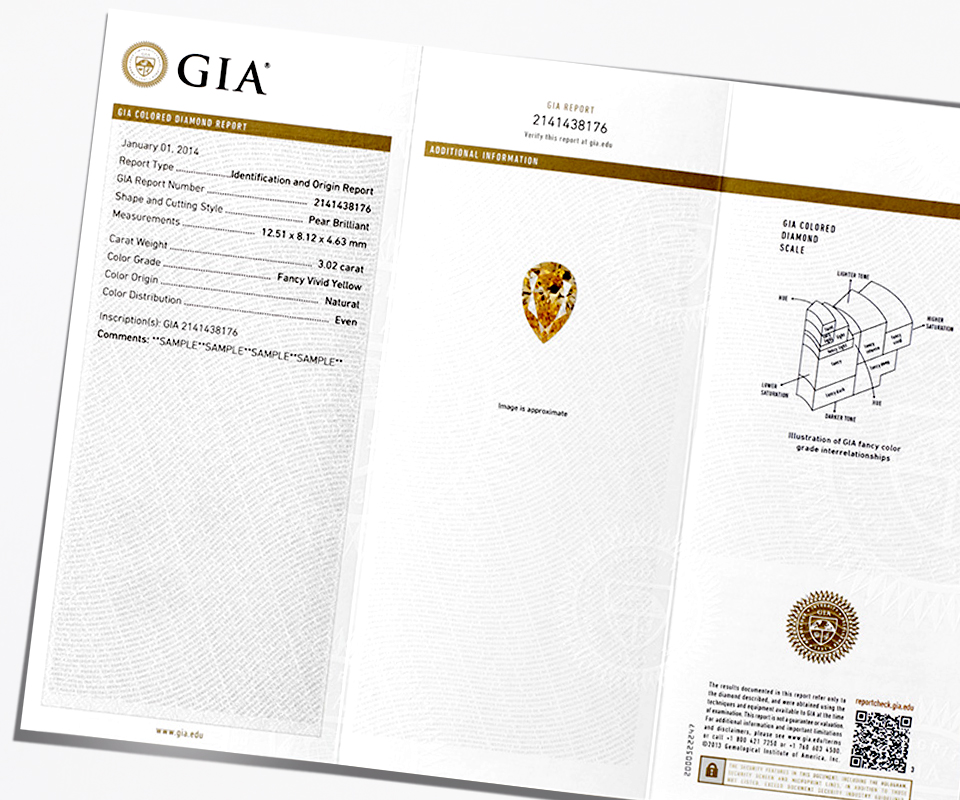
GIA Colored Diamond Identification and Origin Report.
Includes a color grade along with the color origin of the diamond. These GIA reports are available for natural colored diamonds of any size that haven’t undergone any unstable treatments.
Colored Gemstone Identification.
With a database of more than 100,000 individual colored gemstone samples, GIA’s expertise extends well beyond diamonds to colored gemstones. Utilizing decades of experience and analytical tools, we can pinpoint the identity and origin of many gemstones.
We also identify whether or not synthetics, simulants or stones have undergone treatment, including whether or not a gemstone’s color is natural or the result of a treatment.
The GIA Identification Report.
Identifies the type of gemstone and whether it is natural or synthetic, describes detectable treatments, details a full description of cut, shape, weight, measurement and color, and includes a photograph of the gemstone. While available for diamonds, this report is primarily for colored stones.
The GIA Identification & Origin Report.
Identifies the type of colored gemstone, natural or synthetic, informed opinion on geographical origin based on research and known samples, describes detectable treatments, details a full description of cut, shape, weight, measurement, and color, and includes a photograph of the colored gemstone.
Colored Gemstone Identification.
Colored Gemstone Identification.
With a database of more than 100,000 individual colored gemstone samples, GIA’s expertise extends well beyond diamonds to colored gemstones. Utilizing decades of experience and analytical tools, we can pinpoint the identity and origin of many gemstones.
We also identify whether or not synthetics, simulants or stones have undergone treatment, including whether or not a gemstone’s color is natural or the result of a treatment.
The GIA Identification Report.
Identifies the type of gemstone and whether it is natural or synthetic, describes detectable treatments, details a full description of cut, shape, weight, measurement and color, and includes a photograph of the gemstone. While available for diamonds, this report is primarily for colored stones.
The GIA Identification & Origin Report.
Identifies the type of colored gemstone, natural or synthetic, informed opinion on geographical origin based on research and known samples, describes detectable treatments, details a full description of cut, shape, weight, measurement, and color, and includes a photograph of the colored gemstone.
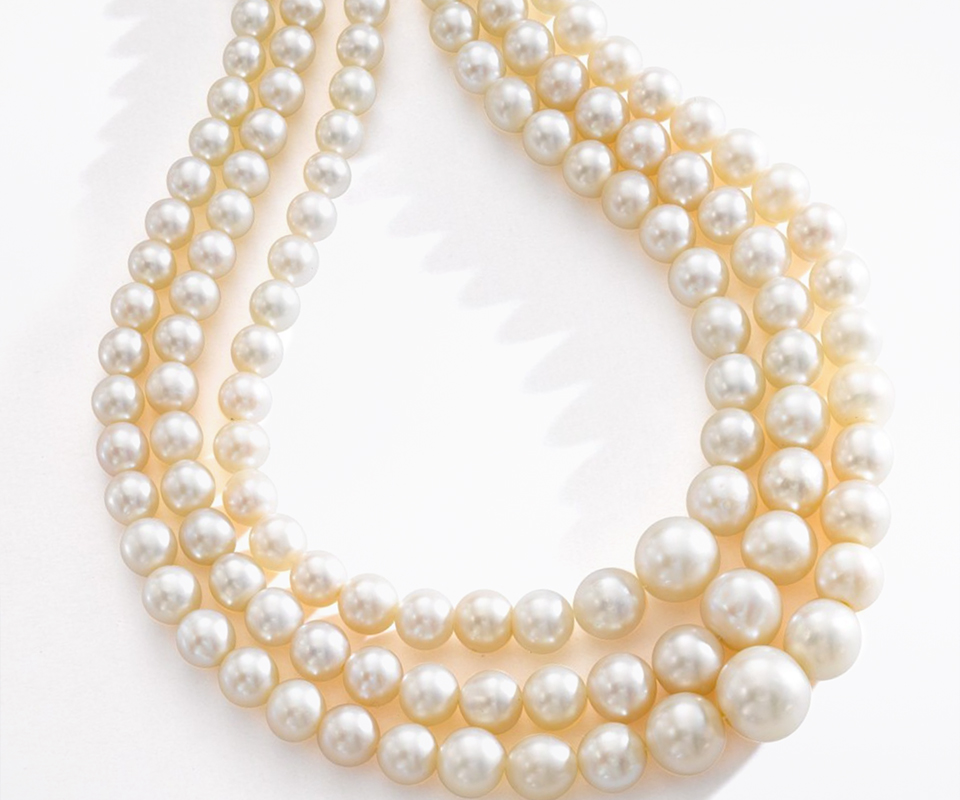
Pearl Classification and Analysis.
Pearl culturing has become a popular alternative to natural pearls in jewelry. GIA created a standardized language for describing both loose and strung pearl quality. GIA’s system is based on GIA’s 7 Pearl Value Factors™: size, shape, color, luster, surface quality, nacre quality and matching.
GIA Pearl Identification Report. Identifies the quantity, weight, shape, color, origin (natural or cultured and type of nucleation), mollusk (if determinable), environment (saltwater or freshwater), and any detectable treatments.
GIA Cultured Pearl Classification Report. Includes a detailed classification of cultured pearls based on the GIA 7 Pearl Value Factors™. For loose, mounted, or strung pearls.
GIA Pearl Identification and Classification Report. Includes all Identification Report and Classification Report information for loose and strung pearls.
Expertise at your fingertips.
You don’t need to be a gemologist to purchase a diamond with confidence. You just need to know where to find one.
GIA is the trusted benchmark for diamond grading. Download the GIA App now to learn more about the 4Cs and look up GIA reports.